
Chapter Three — The Fall from Grace
You cannot keep someone from leaving you. Let them go… but don’t ever forget who you are.

The blue fires of downfall burn quieter than you’d think. They do not arrive with explosions.They arrive with the quiet choices, in the slow, yet steady unraveling of what once seemed unbreakable. This chapter is about profound loss — of home, of faith, of the very people we thought would never leave us. But even in the ashes, something stirs. A hum in the mist, a memory of who we were meant to be.
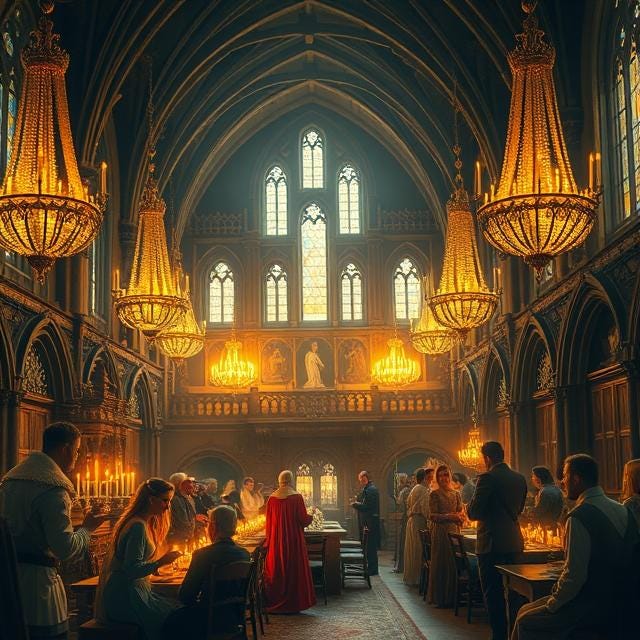
The scent of roasted pheasant and honeyed wine drifted through the grand hall, mingling with laughter, music, and the clinking of goblets. Rhiannon had been twelve years old that night, seated beside her mother beneath the golden lamps.
Her father — Lord Ceryn of Edgefield — stood proudly among the other merchants and magistrates, his voice rich and confident as he toasted once more to the bright future of Eirenfell he believed unshakable. Cloaked in deep blue velvet, eyes alight with ambition, he had rested a warm hand on her shoulder while he spoke of restoring honor to the realm — of building bridges between worlds. Nobles and councilmen raised their glasses; priests of the old temples murmured blessings. Even the mist outside the windows had shimmered, as though in approval.
Her mother, radiant in green silk, had laughed softly beside her — whispering something mischievous to an elderly priest who once taught them the rites of the Temple. The night had seemed endless, gilded with music and mirth. But dreams rot quickly when envy finds them.
Toward the end of the gathering, a messenger slipped through the crowd and whispered something into Lord Ceryn’s ear. The color drained from his face. His smile faltered. That was the first crack.
Then came the rumors — of misused council funds, forbidden dealings, and whispered accusations of treachery. Allies turned away. Within weeks, their lands were seized. Rhiannon remembered her father’s trembling hands clutching the doorframe as soldiers tore through their home, her mother’s quiet sobs as the family crest was wrenched from the gates.
By the time they were forced to the small cabin at the edge of Edgefield, the man who had once commanded halls and hearts alike had become a ghost of himself.
Six years later, the proud merchant sat hunched over a tavern table, surrounded by broken bottles and the acrid stench of ale.
“You think I wanted this?” he spat, his red eyes wild. “To live like beggars on the edge of what was once ours? I built everything they took from me!”
“You destroyed it yourself, Father,” Rhiannon said, her voice soft but steady. “You drank it away — piece by piece. Mother, our home, your good name—”
“Watch your tongue, girl!” he thundered. “You know nothing of what men lose when they’re betrayed!”
“I do know something,” she said quietly, “about what daughters lose when their fathers stop trying.”
The words hung heavy between them, vibrating with all that would never be said.
He slammed his cup down again, his fury turning to despair. “I was meant for more than this,” he muttered. “If she hadn’t meddled—if they hadn’t stripped me of everything—” He stopped suddenly, the rage ebbing. “I can’t stay anymore. I can’t watch what I’ve become.”
“You mean you won’t,” she said bitterly. “Because loving us would mean facing it.”
His shoulders sagged. His eyes softened, wet and empty. “I do love you. You’ll understand one day.”
She shook her head. “No, Father. I’ll understand why you left, not why you call it love.”
The door closed behind him with a heavy finality. The cold crept in to take his place.
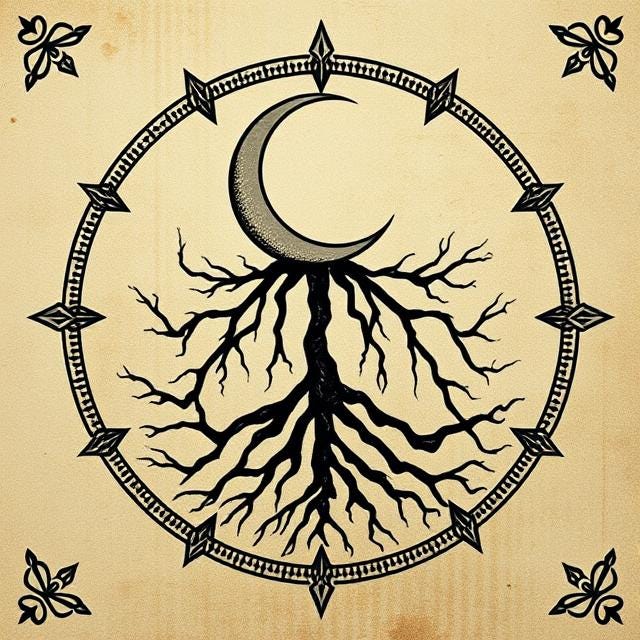
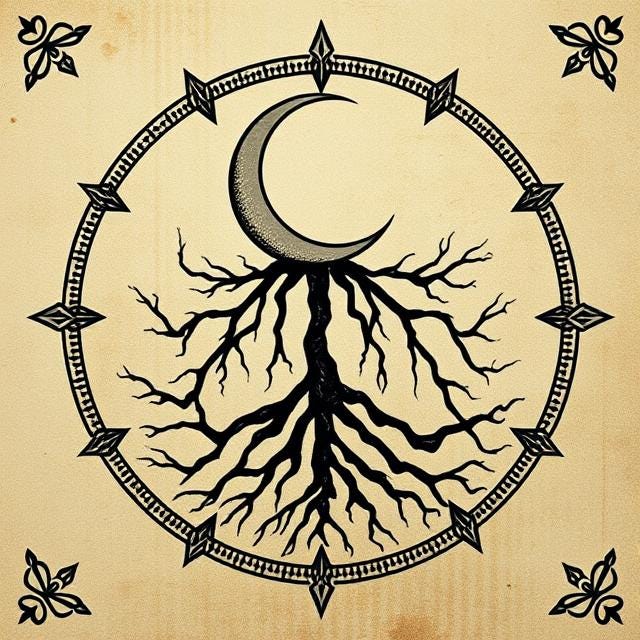
Rhiannon climbed the stairs to her mother’s room. The air smelled of herbs and ash. Her mother lay half-turned toward the window, her breath shallow, her hair strewn like threads of faded gold. Rhiannon touched the amulet at her throat — silver, carved with the crescent and the root — and found it strangely warm.
Her mother stirred, eyes flickering open for a fleeting moment of clarity. “The mist never comes for those who aren’t called,” she whispered. Then, softer: “You cannot keep someone from leaving you, darling. Let them go… but don’t ever forget who you are.”
Rhiannon pressed the pendant to her chest. “I won’t, Mother. I promise.”
When she went downstairs the next morning, the amulet was gone. The mantelpiece where she had left it was empty. Outside, the wind moaned through the trees, carrying with it a bright, distant sound — laughter she hadn’t heard since childhood.
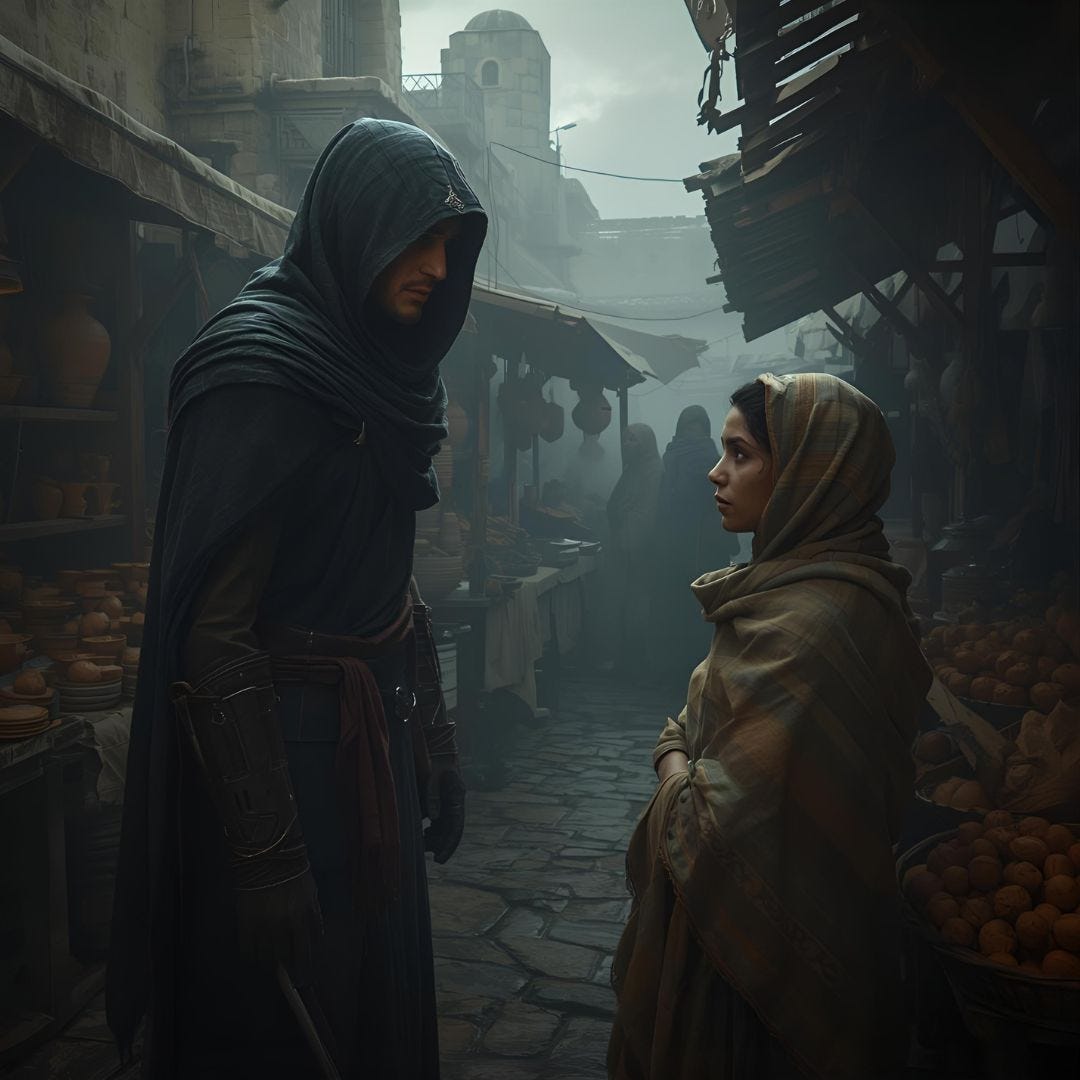
The next day, the market hummed with its usual morning noise. The world, she realized bitterly, went on even when yours had stopped turning.
She reached for a cracked plate at a potter’s stall, her fingers trembling only slightly.
“Ceryn’s daughter shouldn’t have to buy secondhand clay,” said a voice behind her — low, calm, edged like tempered steel.
She turned sharply. A tall man in a weather-stained cloak stood watching her. His hair was dark with a streak of silver at the temple; his eyes the color of stormlight — assessing, unreadable.
“You’ve mistaken me for someone else, sir,” she said coolly.
“I don’t think I have.” He tapped the rim of a bowl. “You carry the mark of the Root. Your blood once bound the Veil. Yet here you stand, bartering for scraps.”
“And you stand here insulting strangers,” she snapped. “What does that make you, then?”
His lips curved — not quite a smile. “Someone who remembers what you were meant to be.”
Her pulse quickened. She hadn’t expected the sting of those words. Still, she raised her chin. “And someone who’ll mind his own business, if he’s wise.”
A gust of wind tore through the square, lifting the mist from the fields. It curled between them like smoke — whispering something only she could hear.
When it cleared, he was gone.
Rhiannon stood still for a long moment, staring at the empty air where he’d been. The faint hum of her dreams echoed in her ears — steady, insistent. She gathered her things and turned toward home.
Behind her, the mist drifted after her like a patient shadow.
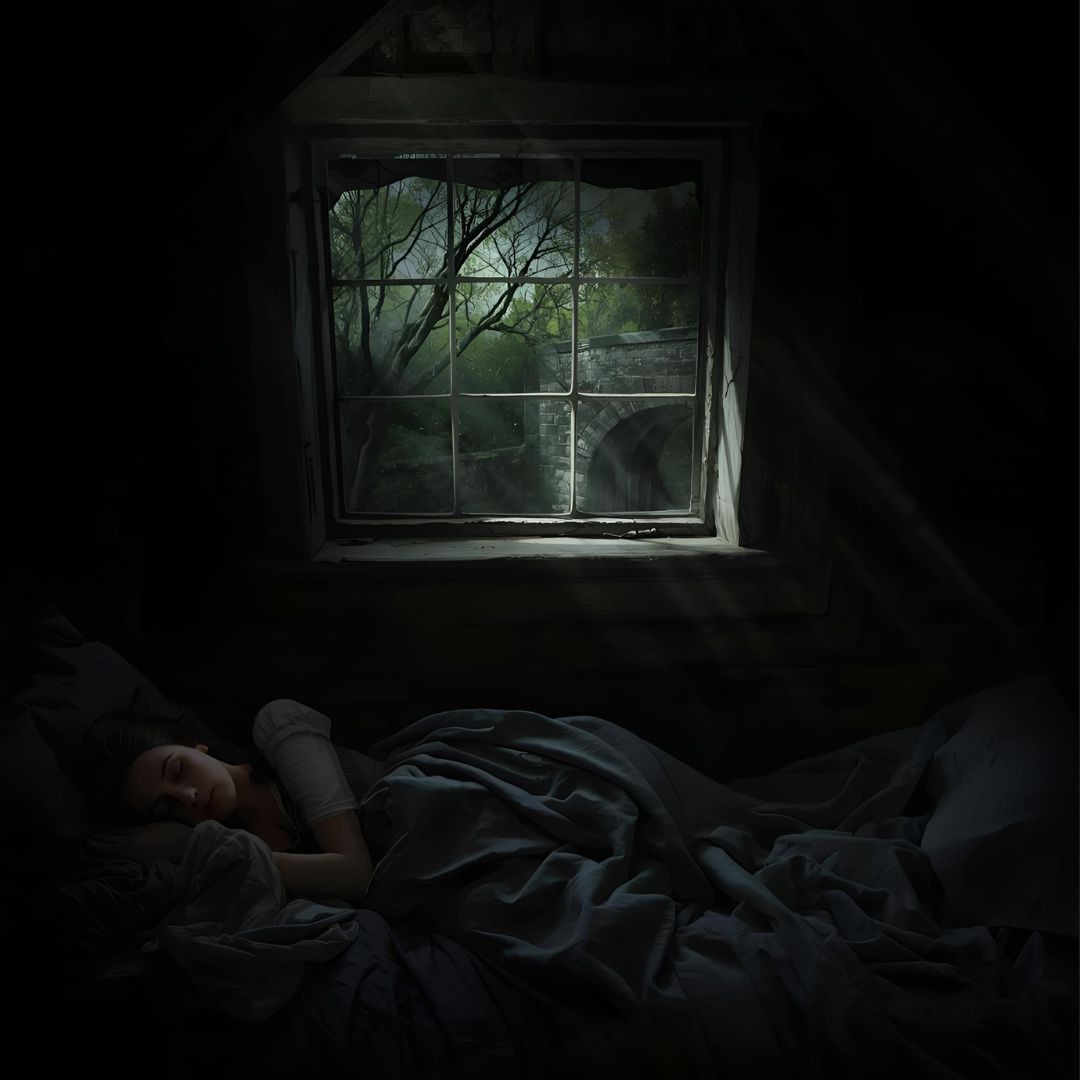
That night, she dreamt of the bridge again.
But this time, the figure who waited on the other side was not faceless.
She stared into stormlit eyes — the same eyes she had met that morning.
Outside, the winds roared and groaned in a violent rhythm, tossing wild shadows against her walls, as though the night itself had learned the pulse of her heart — restless, uncertain but always alive.
Author’s Note
This chapter came from a place of memory. The painful kind that lingers long after the door has closed.
Some losses arrive not with cruelty, but with the quiet cowardice of leaving. There is a specific kind of numb ache in watching someone you love drift away by their own choosing, as though love were too heavy a thing to carry.
I wrote Rhiannon’s loss with the echo of my own. I can still hear the sound of my father’s shoes fading down the hallway, the silence that swelled in their wake — it’s a silence that never truly fades, even now, thirty years later. It settles in the marrow, forever reshaping what trust means, what love means, what home means.
Yet there is also a strange grace in grief. I have found it is quite effective in burning away all illusions, leaving behind only the truth of what we are made of. Rhiannon stands now in that space between the ruin of an unstable present and the uncertain future of her becoming — utterly bewildered, angry, but her essence unbroken.
I’m thinking perhaps that’s what all departures leave us with — the chance to rebuild, even when we swore we wouldn’t.
Thank you for reading…✨
If this little story brought you a moment of stillness, I’m glad.
I believe silence is a kind of grace, and that stories, too, can offer us rest.
You’re warmly invited to subscribe if you haven’t already, to keep receiving gentle notes and slow stories like this one.
Feel free to share with someone who you believe might need a breath of calm today.
And if you’re already here, I thank you. Truly.
You make this quiet corner of the internet feel like home.
With ink and light and, maybe an essence of vanilla,
Lia
Well written! This has me wondering what Rhiannon will do next! ✨️